
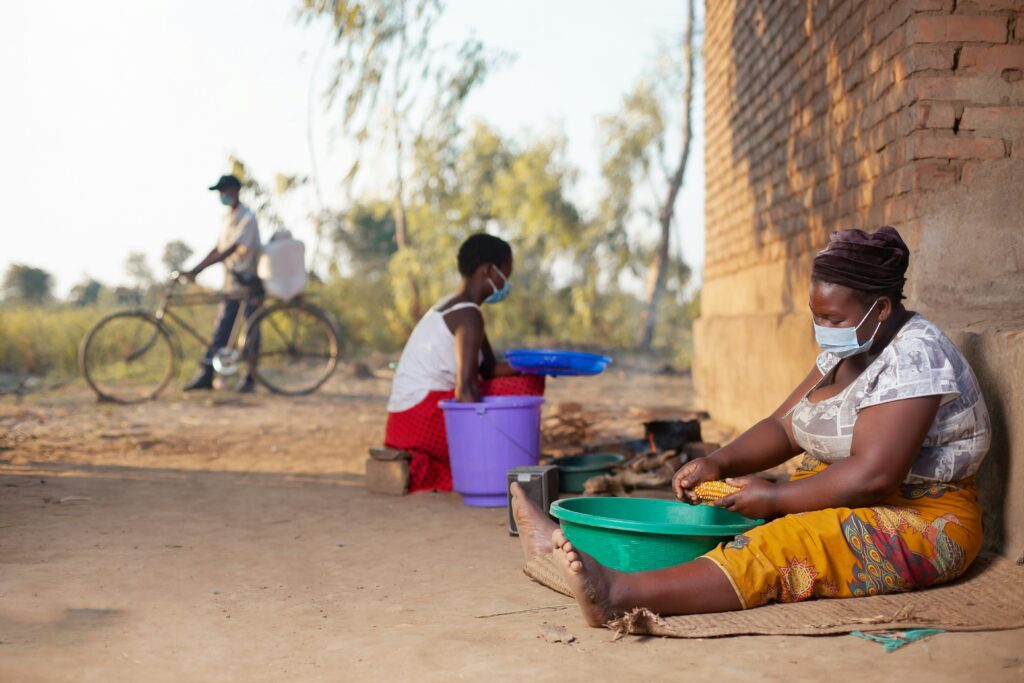
At face value, we would not put a piece of polypropylene no bigger than the palm of your hand in the same bracket as formulations that can put you to sleep within seconds, or machines that can support you to breathe or take over your breathing completely. To outsiders, this piece of fabric was just a part of a bigger working gear donned every time the knife met the skin. It neither enhances precision nor guides the surgeon to carefully sever the right tissue, but just like a paper filter, it prevents specific particles from crossing. It was Dr. Wu Lien-teh who first carried this piece of fabric beyond the operating theatre and into the streets – a decision that would contribute to curbing the most notorious disease of the last decade. The mask was never a new idea. It was an old answer that humanity kept putting down and being forced to pick up again, each time at a greater cost than the last. The trusted scalpel blade of the surgeon was not what came to our rescue when we were on the table of agony.
If you visited someone in the hospital pre-COVID, you were likely to underrate the purpose of a nose mask — but paradoxically it was a symbol associated with key clinical procedures. And in most parts of the world, you were profiled as an alien before even being given a hearing when you wore a face mask in public. Fast forward, we all became aliens as we turned to nose masks. It was uncommon to see someone in a nose mask, even to the point that it was a mark of luxury – possibly because the majority never needed it, which did not warrant asking about the price.
Already, there was some understanding about covering your mouth when coughing or sneezing, thanks to the airborne and droplet-transmitted diseases that had made an early entry. However, their impact on human health was nothing in comparison to the ravaging effects of COVID-19, as far as the living memory of most people was concerned. This might explain why people lost their guard while in the midst of people who coughed. A cough in the pre-COVID era in public was not enough to elicit public outcry from bystanders, possibly owing to the limited understanding of how droplets expelled into the air from an infected person facilitated disease transmission. Some even showed no signs of concern because they seemed to extend a sense of solidarity to the person producing the cough or sneeze. This observation was most common amongst family members. There was also a cognitive bias that children, especially younger ones, were not capable of transmitting diseases through coughing and sneezing. Also, covering your mouth and nostrils with your palm when you coughed was largely seen as a preventive measure, despite the dual disadvantage of inadequacy and hand contamination. As social beings, we were about our daily hugging and handshaking with a sense of physical togetherness.
The handshake has been an integral part of human non-verbal communication since time immemorial. It is used as a greeting and symbolizes approval, allegiance, warmth and loyalty. It could even reveal the health status of someone depending on the strength and grip of the shake. The hand is what usually transforms thoughts produced by the brain into actions, including treacherous ones. An arrow fired to burn down a community, a trigger pulled to fire a shot, a sword removed from a sheath and a push button to release a nuclear bomb are largely the results of the hand. Given this, when the arm is extended, it is a way to tell the other person that there is no malice intended, no weapon within reach, and cordiality is set in motion.
Looking at how the hand is used to frequently reach out to things and maintain interpersonal relationships, one could argue that it must be the body’s most vulnerable tentacular pathway for disease transmission. Aside from the social role of the hands, they also play a key role in meeting the biological needs of man, including feeding, skin scratching and self-touch to relieve stress. Disease-causing organisms, after being picked up by the hand, only need an entry point to wreak havoc on the body. Looking at the biologically instinctive and socially interactive aspects of handshaking, it would be challenging to imagine what could threaten its continuity. The advent of communicable diseases has reduced the frequency of handshaking more than evolution and modernization have done combined.
As social beings, we took satisfaction in keeping one another’s company and yearned to be in the circle of others with whom we shared a common goal. Our ancestors hunted in groups, sympathized with members facing difficult times and had long conversations coupled with physical touch. Any man who found himself alone from the group was filled with terror because his chances of survival dropped to rock bottom as he was engulfed by separation anxiety. We still have an amygdala that functions by processing fear and emotions and detecting threats. The advent of COVID-19, which distanced and isolated people, reminded us of these primitive instincts. Many felt insecure and lost touch with reality.
The magnitude of lives lost from COVID-19, day in, day out, and its unrelenting drive to transcend geographical boundaries with little to no restrictions, were more powerful than the most comprehensive lecture ever given to convince people to adhere strictly to preventive measures. This showed that behavioural change was most effectively achieved when the consequences of an action or inaction were grave and cataclysmic. The fear of death compelled people to follow strict health protocols. Clear visual education on COVID-19 played a major role in helping people understand the causative organism, the mode of transmission, the portal of entry and ways to prevent it. However, it was the massively compounding death tolls that reinforced adherence. Non-conformists conformed, fanatics and zealots reconsidered their stance. Nations – whether powerful or low-income, and regardless of governance type – were dictated to by COVID-19 to do only one thing: lock down. Schools shut down and ministries and offices worked from home. Ghost streets sprang up. Silence became the loudest presence. Separation anxiety filled homes, jobs were lost and many were never retained, hunger crept in slowly but painfully, new black markets emerged, bank accounts were debited with no monthly credits, and fear and panic intensified as the lockdown extended with no end in sight. Porous healthcare systems across primary and tertiary domains were abruptly exposed.
The pandemic did not affect everyone equally. When nose masks became a luxury, not everyone could afford them. People who could not afford them either used them repeatedly or resorted to cloth masks and handkerchiefs – products that lacked the filtering capacity of the surgical mask and may have posed a higher risk of infection. Not everyone went to the hospital to report unusual feelings, probably because they had no health insurance coverage. Others did not know their first point of reporting symptoms because they had no access to information sources. Some diluted their methylated spirits and hand sanitizer gels to increase volume. Handwashing was hardly done under running water. These remain problems that should inform policymakers and health experts about the structural disadvantages embedded in our communities.
On the bright side, people rediscovered themselves since they had ample time to listen to themselves more and connect with the inner self through mindfulness, meditation and dwelling on a thought, devoid of distractions. Time ordinarily consumed by work that left them exhausted now opened up unexpectedly. Others used the opportunity to learn new languages, software tools, karate, boxing, dancing and reading, while at home. Humanity won as many benefactors fulfilled the needs of others by providing meals, groceries, cooking ingredients, drinking water, toiletries and much more.
Back to the most vulnerable tentacular pathway for disease transmission – the hand. Adequate handwashing is an efficient and proven way to reduce pathogen transmission from contaminated surfaces to the eyes, nostrils, mouth or the skin. Ironically, the man who first proved that clean hands save lives was committed to an asylum for saying so. The medical establishment refused to believe Ignaz Semmelweis. It took a global pandemic nearly 160 years later for the rest of the world to finally and collectively do what he begged us to do.
We washed our hands. We covered our faces. We kept our distance from the people we loved most. And in that painful, collective pause, something shifted – quietly, unevenly, incompletely, in how we understood what it means to live alongside each other. Whether that shift endures is entirely up to us.